 Find a store






 All Bathware
 Circle
 Fan
 Herringbone
 Rectangular
 Square
 Hexagon
 Rhombus


 1 Minute Read
 Nov 09


Technology in Tiles: The Innovations Shaping Porcelain Design
In the five years since Covid, tile factories have had to take a hard look at their offering and their place in the market to stay relevant, especially with more well-designed product now coming out of Asia. To cement their place in the design world, the top European factories have explored new ideas and pushed design boundaries with updated machines and technology.
These are the updates and trends we're seeing come through.
3D surface technology: tiles you can feel
In short: the latest 3D technology reproduces the real texture and depth of natural stone, so you can feel a vein where you see one.
It has been a long time since tiles were limited to matt, grip or polished finishes. Factories have been skirting the edge of 3D technology for years, offering a ripple effect or a slate-like structure on the surface of the tile. Now the top factories are asking what's next in finishes.
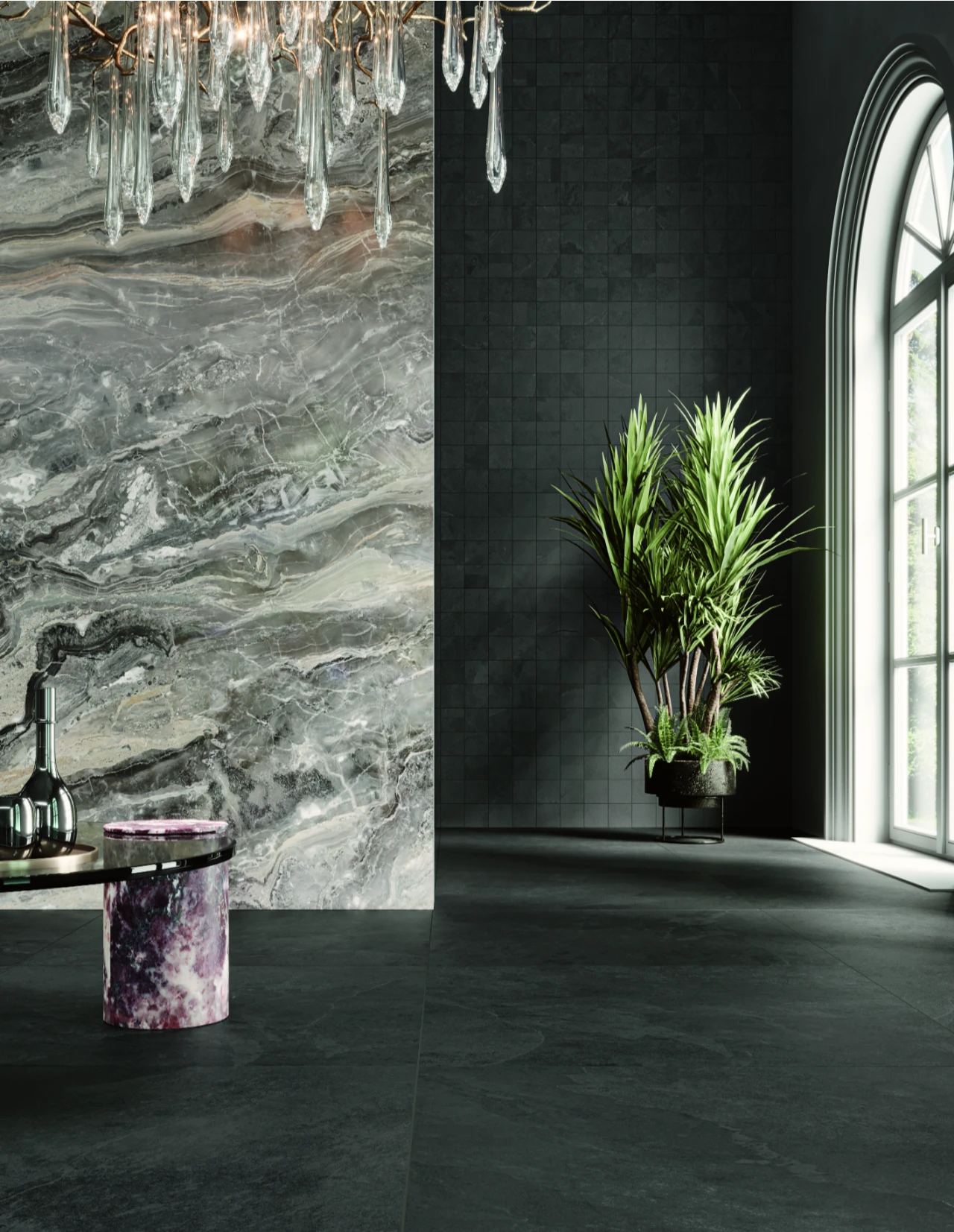
Del Conca, an Italian factory Tile Warehouse has worked with closely for 20 years, is the only Italian factory with the special Dinamika Deep Surfaces technology, designed to emulate the real texture and depth of natural stone. Where a vein appears in the design, a relative deep vein can be felt, recreating both the feel and the look of stone.
- Dinamika Travertino Moka has a chiselled surface that highlights the marks left when stone is worked the traditional way.
- Dinamika Venice Red *coming Soon* highlights the natural ceppo stone chips scattered throughout the tile.
Clever use of lighting really brings these tiles to life.


Unglazed porcelain and the evolution of inkjet technology
In short: digital inkjet printing now absorbs ink into the body of the tile, giving crisper, more realistic designs that are more durable and more efficient to produce.
Unglazed porcelain has been around since the beginning, but it was mostly available in monotone colours for large commercial projects that needed heavy-duty flooring. The alternative was a glazed porcelain or ceramic tile, which was limited in where it could be used.
How digital printing changed tile design
Inkjet technology began to be used more widely in the tile industry from 2000 and was adopted by almost everyone by 2012. In the last five years in particular, we've seen a huge shift from traditional printing to more advanced digital printing, where ink is absorbed into the body of the tile like a tattoo.
The shift to digital printing has brought:
- Unmatched design flexibility
- More realistic, crisp prints
- Faster, more efficient production
- A more eco-friendly process. Traditional tile production uses excessive water and more raw materials
- Greater durability and longevity
Antimicrobial and self-cleaning finishes
This technology also makes it possible to build a self-cleaning mechanism into some tiles. Ranges such as Revel offer the Antimicrobial Protect Microban finish, designed for even the harshest environments where cleanliness comes first, such as hospitality and health sector builds.
More playful and creative glazing techniques
In short: factories are now manipulating glazes to create effects that weren't possible before, from a backlit stone glow to one-of-a-kind reactive patterns.
The backlit onyx effect, without the lighting
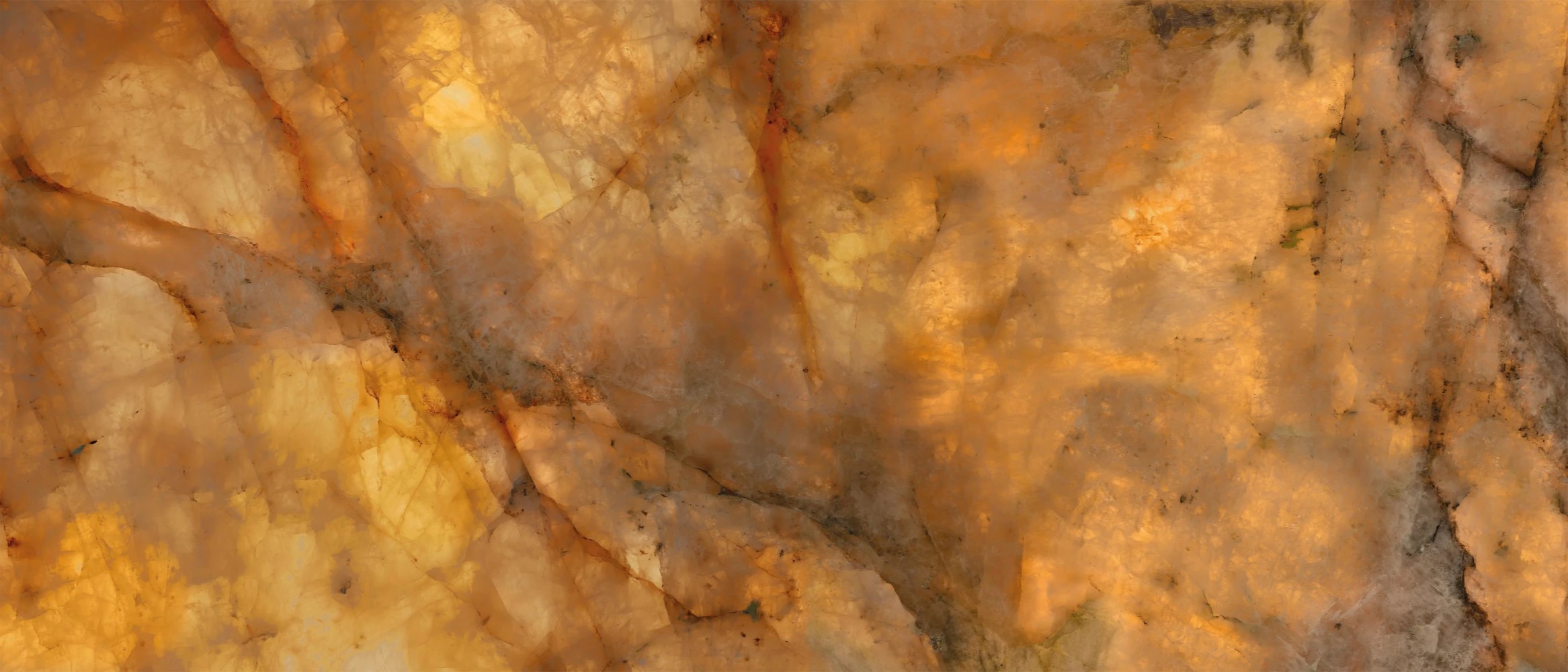
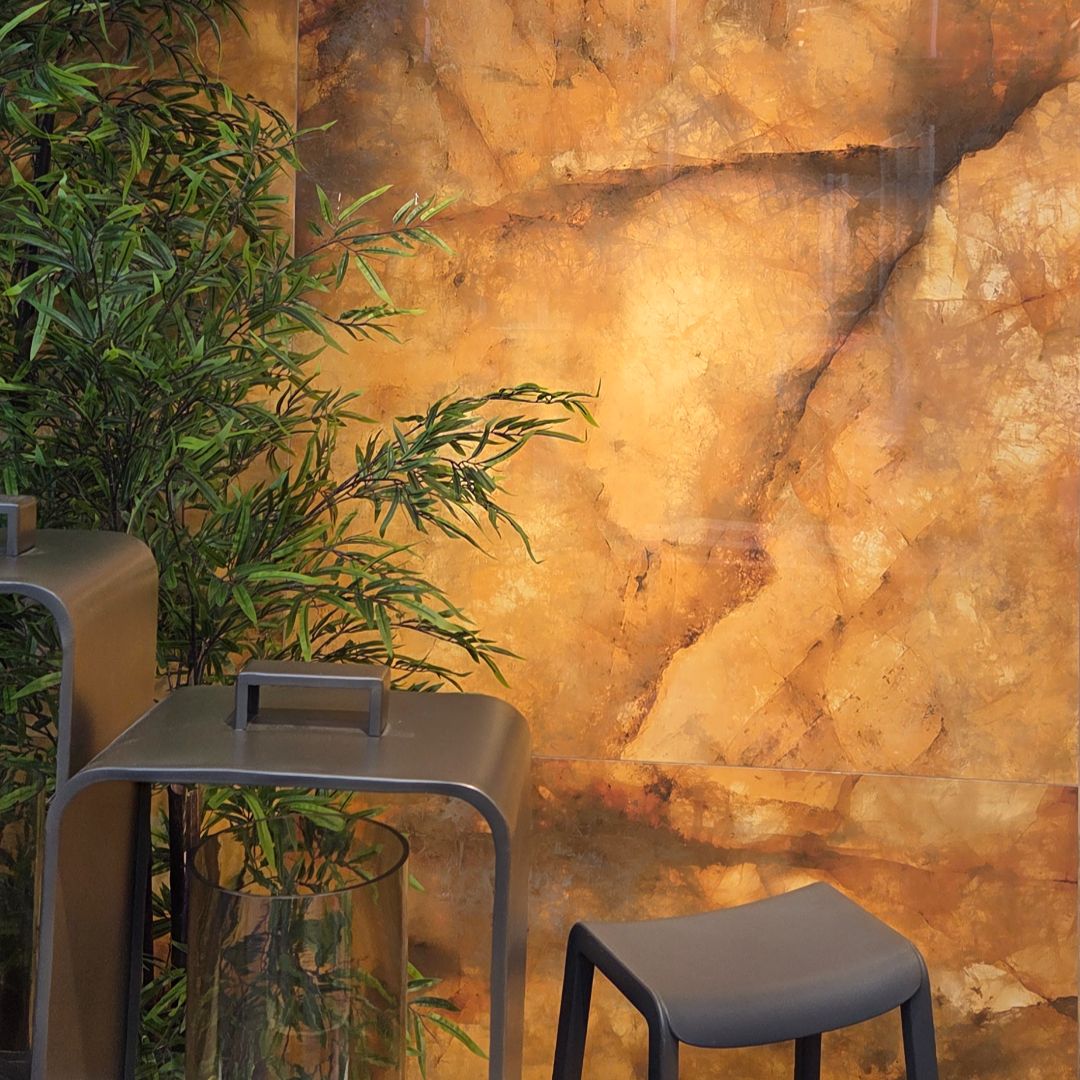
Factories are now looking at how they can manipulate glazes to emulate things never thought possible. One example is the effect of a backlit onyx or stone slab. Careful injections of more yellow pigment mimic backlighting, creating a clever glow without needing a cavity for lighting behind the slab.
Luminescence Gold, in slab and tile, is the best example on the market. Solara Amber is a new introduction arriving in stock soon.
Reactive glazes: no two tiles the same
Another effect is reactive glaze. The glaze is applied to the biscuit of the tile, and chemical reactions happen inside the kiln during firing as the contents of the glaze react with the ceramic body. The unpredictable movement creates all sorts of varying effects and patterns, producing one-of-a-kind results.

See the technology in person
Texture, depth and glow are hard to judge on a screen. Visit one of our 35+ stores to see and feel these surfaces, or talk to our commercial team about your next specification.
Frequently asked questions
What is 3D tile technology?
3D tile technology creates real texture and depth on the surface of a tile. Dinamika Deep Surfaces technology, for example, is designed so that where a vein appears in the design, a relative deep vein can be felt, emulating natural stone.
What is digital inkjet printing in tiles?
It's an advanced printing method where ink is absorbed into the body of the tile like a tattoo. It gives more realistic, crisp prints and more design flexibility, and production is faster, more efficient and more eco-friendly than traditional methods.
When did inkjet technology become standard in tiles?
Inkjet technology began to be used more widely from 2000 and was adopted by almost everyone in the industry by 2012. The biggest shift to advanced digital printing has come in the last five years.
Are there antimicrobial tiles for hospitality and healthcare projects?
Yes. Ranges such as Revel offer the Antimicrobial Protect Microban finish, designed for environments where cleanliness comes first, such as hospitality and health sector builds.
Can a tile look backlit without lighting?
Yes. Careful injections of yellow pigment into the glaze can emulate a backlit onyx or stone slab, without a lighting cavity behind it. Luminescence Gold is an example.
What is a reactive glaze?
A reactive glaze is applied to the biscuit of the tile and reacts chemically with the ceramic body during firing. The unpredictable movement creates varying effects and patterns, so each tile is one of a kind.


 Save and collect tiles

