 Find a store






 All Bathware
 Circle
 Fan
Fan
 Herringbone
 Rectangular
 Square
 Hexagon
 Rhombus


 1 Minute Read
 Jul 27


The complete guide to underfloor heating with tiles in New Zealand
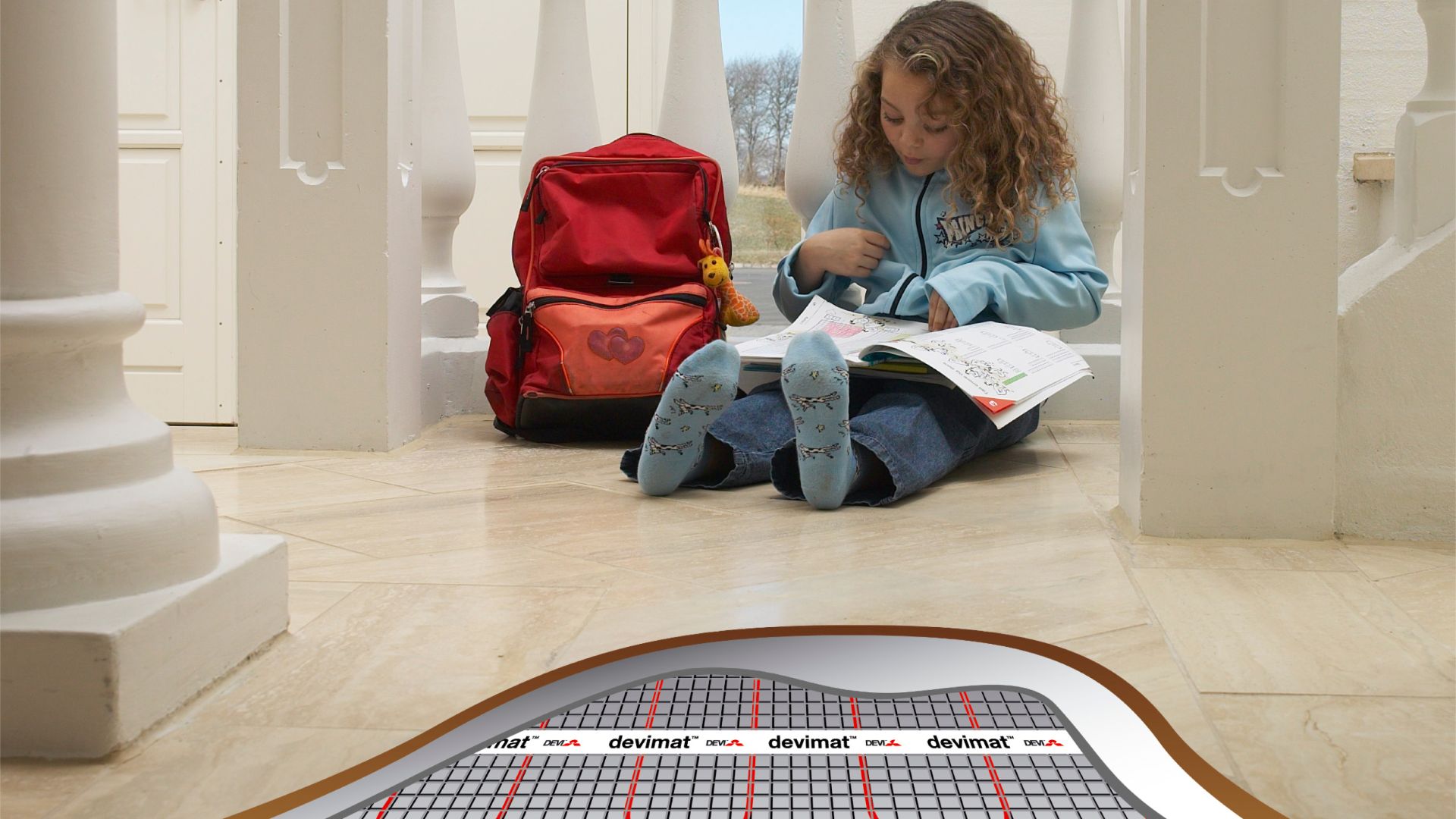
Underfloor heating has quietly become one of the most sought-after features in homes around Aotearoa, and for good reason. When it's paired with the right tiles, you get a floor that actually holds and distributes heat beautifully, keeping your whole home warmer for longer.
This guide covers what you need to know to get started, touching on how underfloor heating systems work, which tiles perform best, what you need to know about the New Zealand building code, and what it could actually cost you to run.
Whether you're mid-renovation, planning a new build, or just tired of the morning shuffle to your bath mat, read on.
Why tiles and underfloor heating are a perfect match
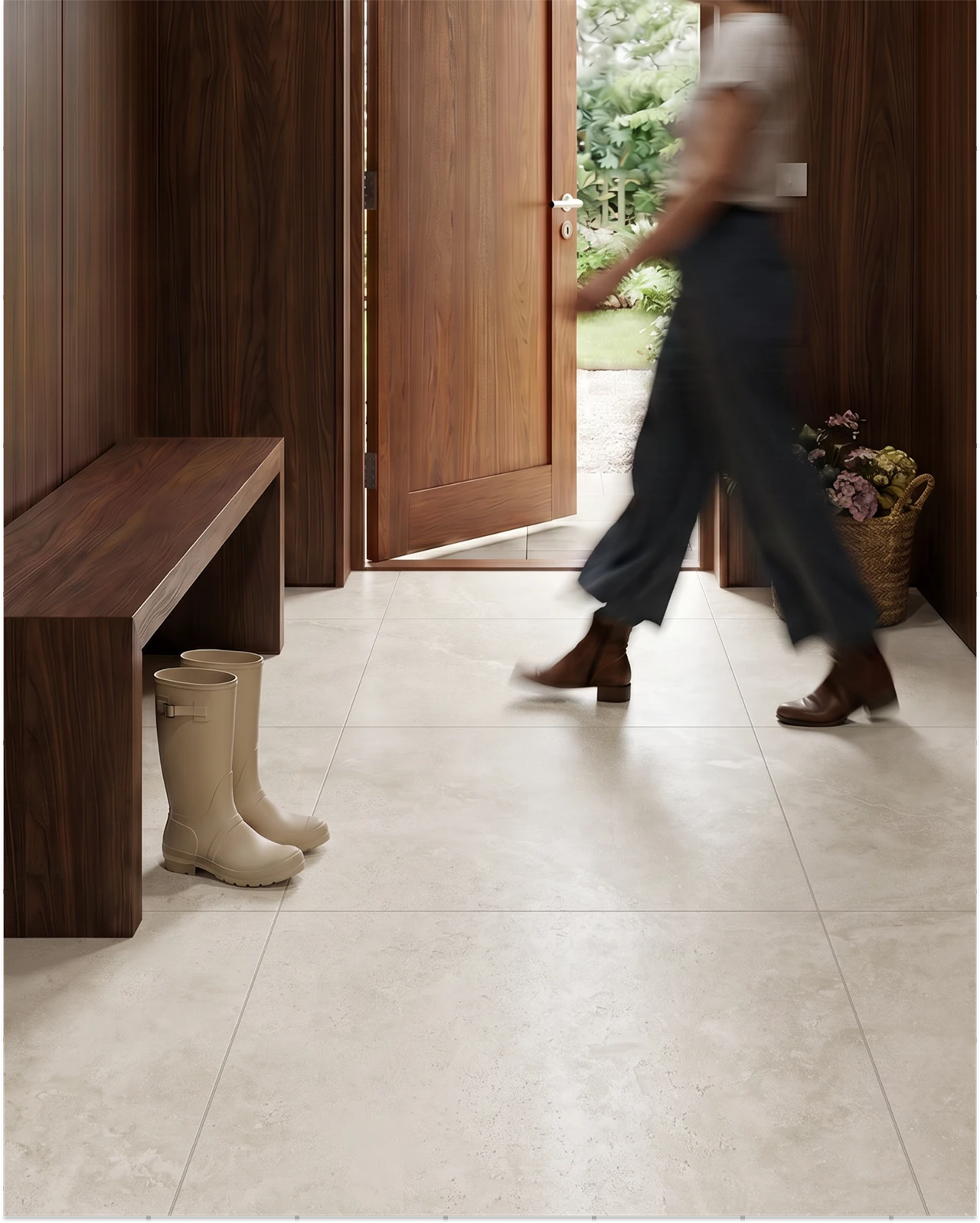
Before we get into the systems themselves, it's worth understanding why tile and stone are the hands-down best flooring choice for underfloor heating — and it comes down to a property called thermal conductivity.
Porcelain tiles conduct heat at around 1.05 W/m.K. Timber sits at 0.10–0.12 W/m.K. In plain terms, tile transfers heat from the heating element below far more efficiently than any other flooring material. It warms up faster, distributes more evenly, and holds its heat longer after the system switches off.
That last point matters more than most people realise. Tiles act as thermal mass — they absorb heat during the day and release it slowly as temperatures drop. Even passively, a well-tiled floor in a north-facing room will absorb solar warmth and quietly release it through the evening. Add an active underfloor heating system underneath, and you have a floor that works hard for your comfort around the clock.
Electric vs hydronic: which underfloor heating system is right for you?
There are three main types of underfloor heating systems available in NZ, and they suit different projects in different ways.
Electric underfloor heating
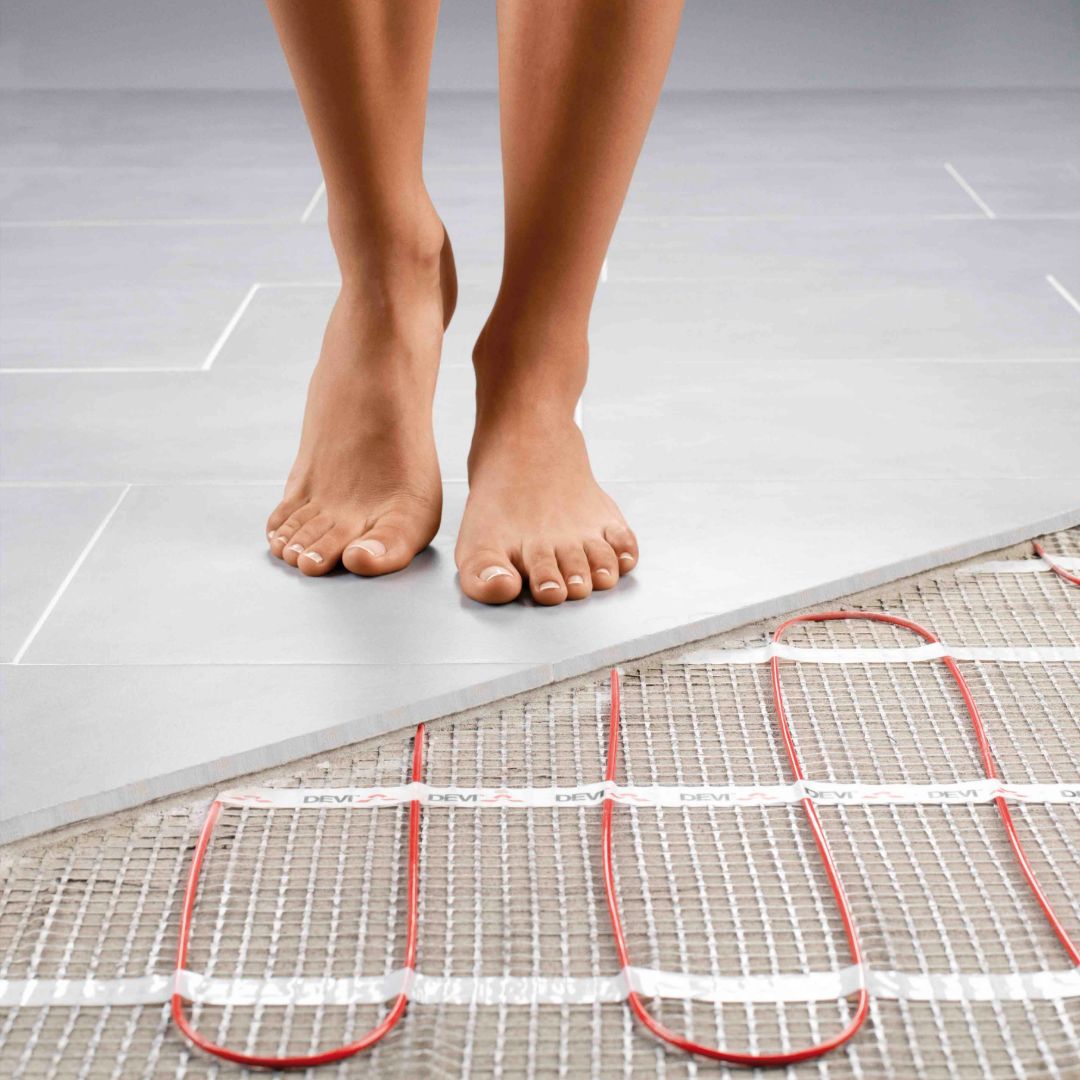
Direct electric systems use a heating cable or mat installed directly beneath your tiles. They're the most popular choice for residential bathrooms, ensuites, and kitchens in New Zealand, largely because they're straightforward to install, relatively affordable upfront, and ideal for single rooms or smaller areas.
This system is quick-responding, typically effecting change in 10 to 20 minutes. Change can be made by manually adjusting the thermostat, or by having a programmable thermostat manage your heating automatically. For larger rooms that are tiled, under-tile heating serves as a great maintenance-free way to heat your floor and provide room heating from the floor up.
In some instances, different cables embedded into a concrete floor slab can be used to take advantage of the cheaper off-peak night rate or low-tariff times. This form of heating acts in a manner similar to night storage heaters and is not as quick-responding to changes in scheduling or thermostat setting variations. Different parts of New Zealand have different price rates for domestic connections.
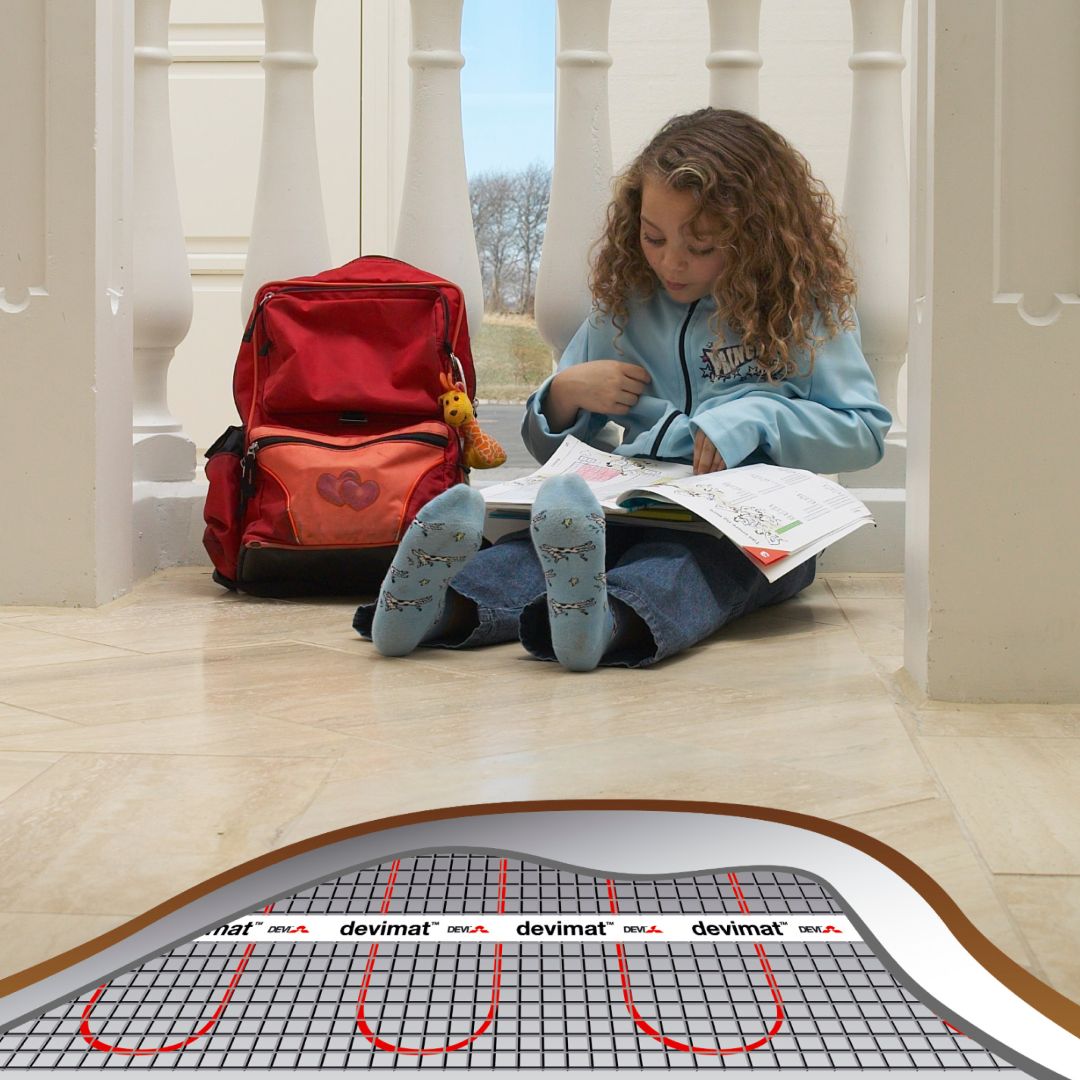
Tile Warehouse supplies and recommends the DEVI underfloor heating system, one of Europe's most trusted and widely installed heating cable brands. DEVI systems are designed and specified for the demands of New Zealand conditions and are compatible with both new builds and renovation projects.
Electric systems connect directly to your home's power supply and are typically controlled via a programmable thermostat. You set it and forget it — the floor reaches your desired temperature before you even get out of bed.
DEVI electric under-tile heating elements have a design life of approximately 50 years maintenance-free and carry a generous lifetime manufacturer's warranty.
Best for: Bathrooms, ensuites, kitchens, laundries, and any other individual rooms in existing homes that you wish to heat.
Hydronic underfloor heating
Hydronic systems circulate warm water through a network of pipes embedded beneath the floor. They're more complex to install and require a boiler or heat pump as their energy source, but they can be more efficient when used to heat an entire home, particularly in new builds where the infrastructure can be designed from the ground up. One point that most people and specifiers overlook about a hydronic system that uses heat pump technology to heat the water (to heat your floor) is that they carry a significantly higher maintenance cost than electric under-tile heating. Depending on usage of the heating system over an extended period, hydronic heating may be no cheaper than direct electric.
Hydronic systems have lower running costs over the long term, especially when paired with a heat pump. However, the upfront installation cost is significantly higher, and retrofitting them into an existing home is a major undertaking.
Best for: Whole-home heating in new builds, large open-plan living spaces, and projects where long-term energy efficiency is the priority.
So, which should you choose?
For most homeowners renovating a bathroom or kitchen, electric underfloor heating is the practical, cost-effective answer. For those building new and wanting to heat their entire home from the floor up, either electric or hydronic is worth the investment conversation with your builder early in the project.
What tiles work best with underfloor heating?
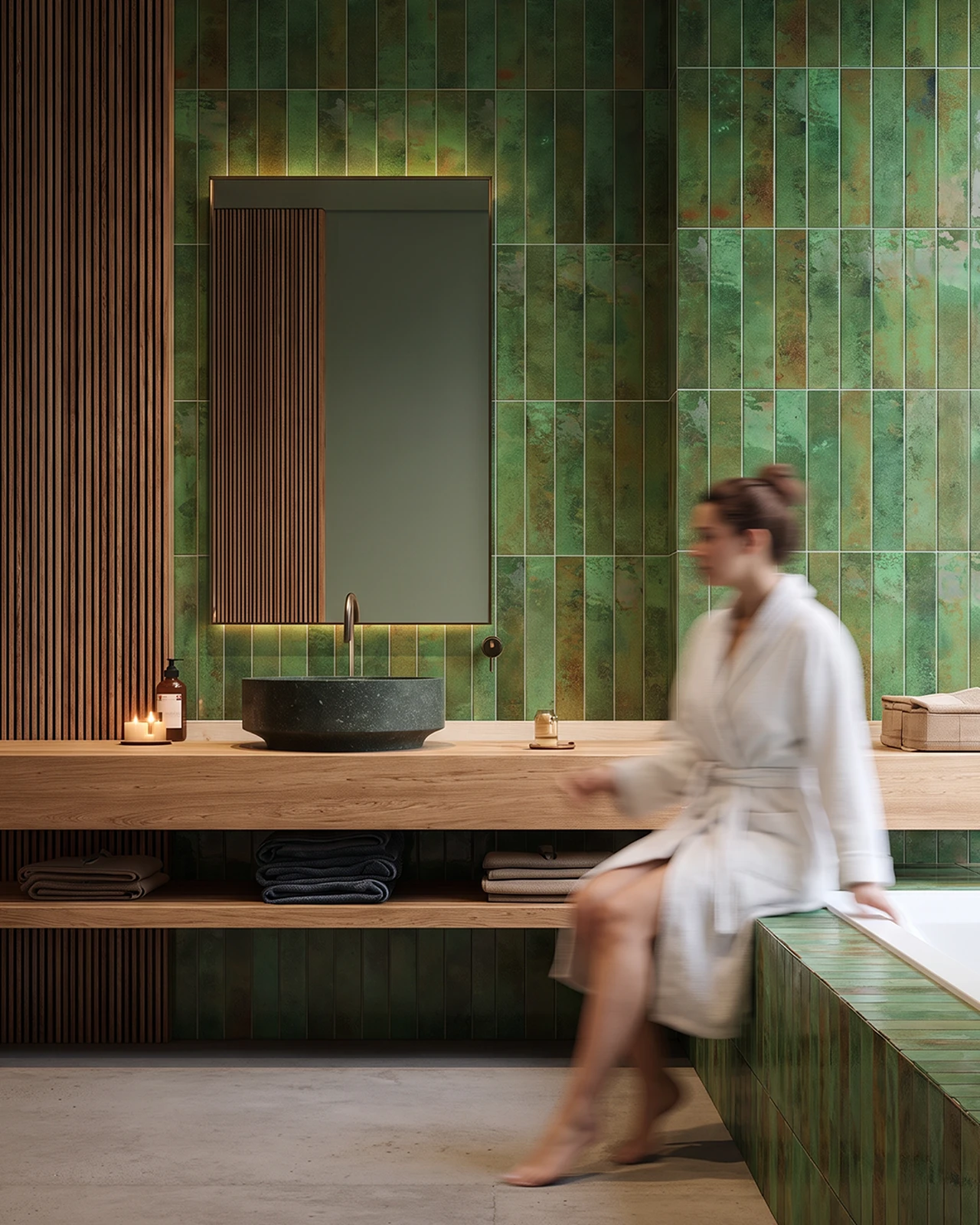
The short answer: porcelain and stone. Both conduct heat efficiently, handle temperature cycling without issue, and aesthetically, look brilliant.
Here's what to look for when choosing tiles for a heated floor.
Porcelain tiles
Porcelain is the most popular choice for underfloor heating in NZ homes, and it's easy to see why. It's dense, dimensionally stable, and highly conductive, meaning it heats up quickly and holds temperature well. It's also water-resistant and extremely durable, which makes it ideal for bathrooms and kitchens where UFH is most commonly installed.
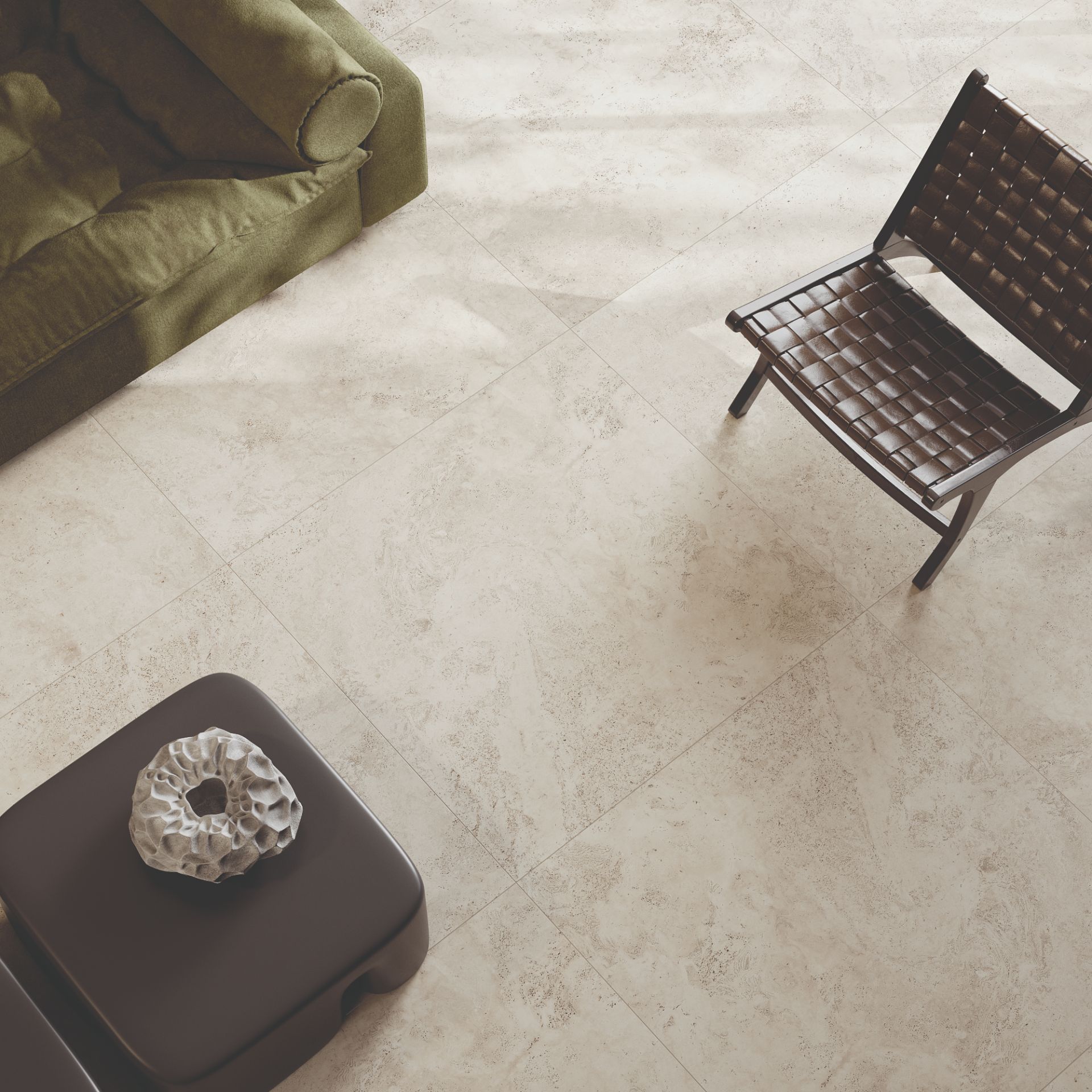
For a contemporary look, large format porcelain tiles are a brilliant choice. This includes tiles 600x600mm and above, which have fewer grout lines — meaning more uninterrupted tile surface in contact with the heat below, giving you even better heat transfer and a floor that warms faster. The seamless aesthetic they create is also increasingly popular in bathrooms and living spaces, adding a sense of space and flow.
What about tile thickness?
Thinner tiles (around 10mm) heat up slightly faster than thicker ones (20mm+) because there's less mass for the heat to travel through. That said, the difference in performance is minimal with modern systems, and far less important than choosing the right tile type in the first place. For underfloor heating in bathrooms, a standard 10–12mm porcelain tile is perfectly suited.
Underfloor heating and NZ building code: what you need to know
New Zealand's H1 Energy Efficiency building code sets minimum requirements for insulation in new builds, and underfloor heating projects need to be designed with this in mind.
The key requirement when installing electric UFH is to include an insulation board beneath the heating element. Without it, a significant proportion of the heat generated simply travels downward into the subfloor rather than upward through your tiles. An insulation board (sometimes called an F-board) redirects that heat where you want it — into the room — and significantly reduces running costs.
This is especially important in new builds subject to the updated H1 requirements. When specifying or quoting a UFH installation, make sure your tiler confirms that an appropriate insulation layer is included in the system design. Tile Warehouse's trade products range includes the installation materials needed for a compliant, correctly specified job.
For renovations in existing homes, the same principle applies: insulation beneath the heating cable is best practice and will pay for itself in lower running costs over time.
What does underfloor heating actually cost to run?
This is the question everyone asks, and the answer is more reassuring than most people expect.
A well-installed electric UFH system with proper insulation beneath typically costs around $0.50 per day per square metre to run. A standard bathroom of around 6–8m² would therefore cost roughly $3–4 per day to heat at current electricity rates. In practice, most people run their heated floors for only a few hours a day. A programmable thermostat means your floor is warm when you need it — early morning, evenings — and off the rest of the time. Set it to come on an hour before your alarm goes off and you'll step out of bed onto a warm floor every morning without ever thinking about it.
A few factors that affect running costs:
- Temperature. The running cost is directly proportional to how high the thermostat is set. For each degree of set temperature change, running cost increases by up to 6% (irrespective of what type of heating system is installed).
- Insulation quality. A correctly insulated floor can reduce heat loss by up to 30%, directly lowering your energy use.
- Thermostat programming. Running the system 24/7 is unnecessary and expensive. A programmable thermostat is essential, not optional.
- Tile choice. Highly conductive tiles (porcelain and stone) heat up faster and retain heat longer, meaning the system runs for less time to achieve the same result.
- Room size. Smaller rooms like bathrooms are the most cost-effective spaces to heat with electric UFH. Larger open-plan areas are well served by either electric or hydronic systems.
Tile thickness, adhesive, and grout: the installation details that matter
Good installation is as important as good products. A few things worth knowing before your tiler starts:
- Flexible tile adhesive is non-negotiable. Standard adhesive can crack under the thermal expansion and contraction that comes with a heated floor. Always specify a flexible adhesive rated for use with underfloor heating — your tiler should know this, but it's worth confirming.
- Expansion joints matter. Tiles expand slightly as they heat and contract as they cool. Perimeter expansion joints around the edges of the room and movement joints within large floor areas allow for this movement without cracking.
- Grout selection. A flexible, unsanded grout is recommended for heated floors. It accommodates the slight movement the system creates and maintains its integrity over time.
- Tile size and grout joints. Large format tiles over UFH should still maintain a 2–3mm grout joint to allow for expansion. Don't be tempted to go too tight.
If you're working with a tiler or builder, point them to Tile Warehouse's trade range — it includes the adhesives, grouts, and installation accessories specified for heated floor applications.
Frequently asked questions
Can I install underfloor heating under any tile?
In practical terms, yes — but porcelain and stone tiles perform significantly better than ceramic over UFH due to their higher thermal conductivity. Ceramic tiles will still work; they just take longer to heat and retain less warmth.
Can I retrofit underfloor heating in an existing bathroom?
Yes. Electric UFH systems can be installed during a bathroom retile without major structural work. It's worth doing when you're already having the floor re-laid, as the additional cost of adding the heating element at that stage is relatively modest.
Do I need a new thermostat?
Yes, a programmable thermostat is a standard part of any UFH installation. It allows you to control when the system runs and at what temperature, which is essential for managing running costs.
Is underfloor heating safe in wet areas like showers?
Yes, when correctly waterproofed and installed to NZ building standards. Waterproofing is applied before the tiles are laid, and the UFH system is installed with appropriate moisture protection in place. DEVI under-tile elements are IPX7 and are impervious to moisture.
Will underfloor heating add value to my home?
Almost universally, yes. Heated bathrooms and tiled living areas are a valued feature in the NZ market, particularly in colder regions. It's one of those upgrades that's hard to quantify precisely but easy to appreciate every morning. Many a person has regretted omitting it from the build soon after completion.
Is electric UFH compatible with solar?
Yes. DEVI under-tile heating works well if you have solar power, and if used during the daytime, it is even cheaper to run.
Ready to explore your options?
Whether you're planning a full bathroom renovation or just looking to make one cold room infinitely more liveable, underfloor heating with the right tiles is one of the most genuinely satisfying upgrades you can make to a NZ home.
Browse our floor tile range, large format options, or visit your nearest Tile Warehouse store to talk through your project with our team. We can advise on tile selection, DEVI underfloor heating specifications, and connect you with our trade team for larger projects.
Find your nearest store at tilewarehouse.co.nz/locations.


 Save and collect tiles